
VINTAGE
Time is part of the piece. Vintage Moroccan rugs handwoven decades ago in different regions of the Atlas, selected for the singularity of their colour, pattern and history.
They have lived in Moroccan homes and passed from one generation to the next. Over time, the wool develops a distinctive patina, softening the colours and adding depth. Each rug carries the marks of real use — wear, irregularities and the passage of time — elements that form part of its character and cannot be replicated.
For interiors seeking something with a history of their own.
-
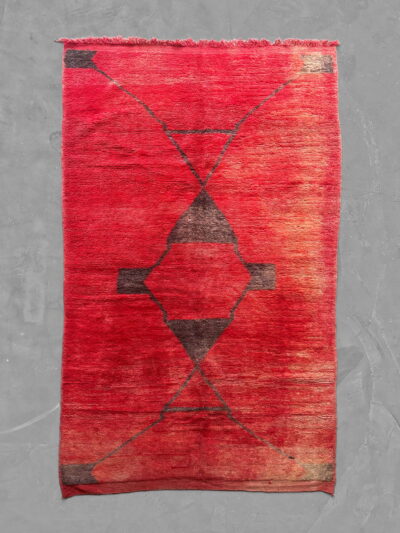
04:40
146 × 237 cm650,00 € -
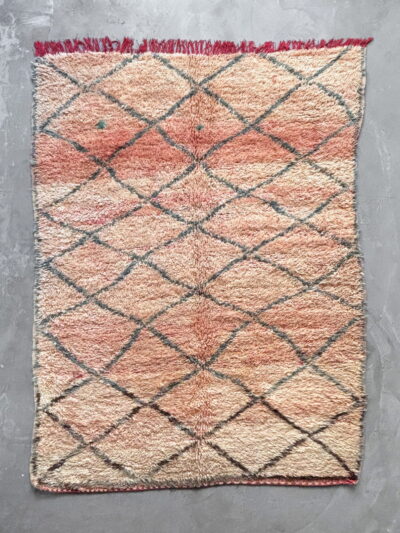
13:31
250 × 190 cm1.200,00 € -
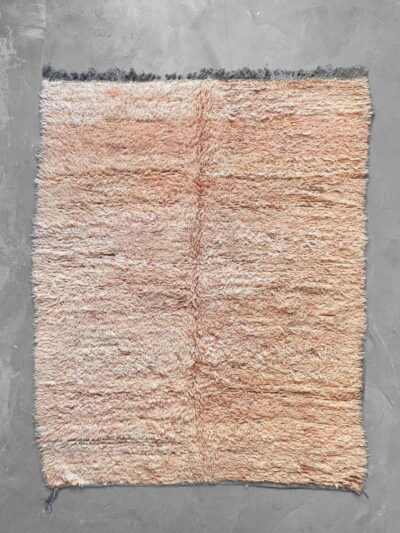
10:01
256 × 206 cm1.200,00 € -

15:28
175 × 296 cm950,00 € -

20:48
165 × 210 cm650,00 € -

06:47
115 × 200 cm350,00 € -

18:26
170 × 170 cm550,00 € -

08:47
165 × 217 cm550,00 € -

20:12
176 × 260 cm550,00 € -
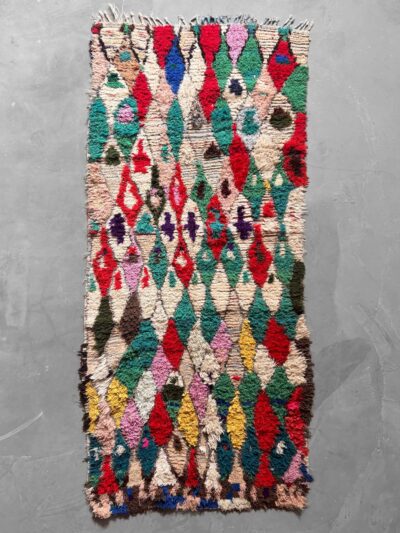
21:18
112 × 250 cm450,00 € -

16:32
113 × 210 cm450,00 € -

14:49
150 × 256 cm450,00 € -

07:54
178 × 246 cm520,00 € -

07:16
62 × 150 cm120,00 € -

09:26
111 × 272 cm520,00 € -

18:59
174 × 295 cm580,00 € -

13:04
116 × 150 cm380,00 € -

13:24
250 × 154 cm550,00 € -
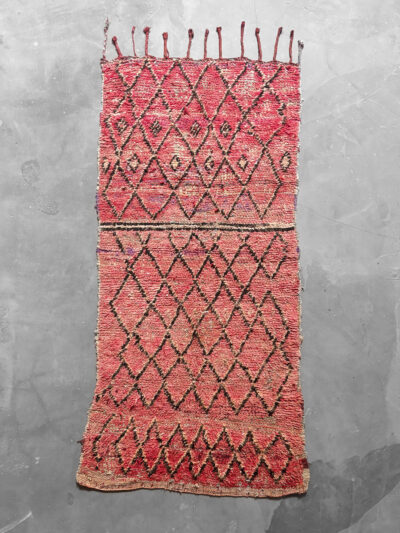
18:29
85 × 180 cm280,00 € -

14:38
120 × 250 cm450,00 € -

18:55
80 × 288 cm270,00 € -

21:51
153 × 286 cm750,00 € -
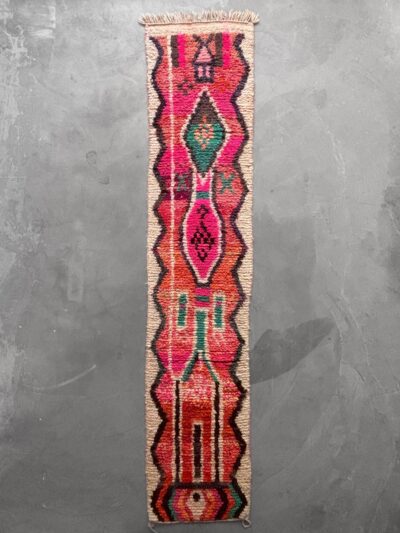
11:12
72 × 240 cm330,00 € -
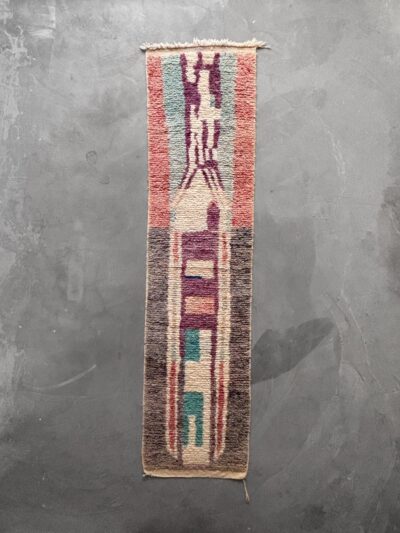
11:14
74 × 285 cm330,00 € -
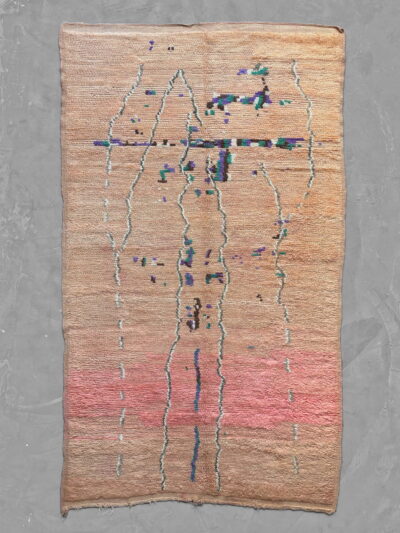
14:41
160 × 270 cm790,00 €
What makes a Moroccan rug vintage
A vintage Moroccan rug is not defined by age alone. It was woven for a particular home in the Atlas: to cover the floor, to warm a bed, to see a family through the winter. It has been in use for years, often for decades, and has passed from one generation to the next before reaching us.
That is the difference from pieces woven from the start for sale, gathered in Archive. Both have years and patina. Only vintage rugs have a domestic life behind them.
Where they come from
Each region of the Atlas has its own way of weaving, and vintage rugs keep that mark clearly. Beni Ouarain and Beni Mguild rugs, from the Middle Atlas, are thick-wooled and high-piled, made for mountain cold. Marmoucha rugs share that dense wool with a more geometric design. Azilal rugs, from the High Atlas, work colour freely over pale grounds. Boujad rugs, from the plains, are recognisable by their faded pinks, oranges and reds.
Boucherouite rugs tell another story. They were woven from scraps of fabric and clothing no longer in use, and vintage pieces from this tradition are a record of the colours and materials found in each home.
How to recognise an authentic vintage rug
The back tells you almost everything. In a handwoven piece the knots can be seen one by one, with small irregularities, and the design reads from behind almost as clearly as from the front. On a machine-made rug the back is uniform, or covered with fabric.
Colour is the second clue. Over the years wool lightens unevenly: tones soften where the light falls and hold where the rug was covered. Added to this are the shifts in tone that come from dyeing wool in batches. Neither can be imitated.
And wear. Areas with lower pile, a repaired edge, fringes shortened over time. These are not flaws to hide: they are proof that the rug has truly been used.
What to expect from a used piece
Every vintage rug arrives checked and clean, but not new. It may have more worn areas, small differences in pile height or an edge that is not perfectly straight. Each product page shows it as it is, photographed in natural light with no colour retouching. If you would like to see a detail up close, ask us for more photos or a video.
In the space
A vintage rug does not need antique furniture around it. It works just as well under a contemporary table, in a clean-lined living room or beside pale wood and concrete. It brings what a newly finished interior does not yet have: time. That is why it suits a new home as much as a space with history.
How to care for it
A rug that has lasted decades keeps lasting when treated calmly. Vacuum it once a week in the direction of the pile, without a rotating brush. Turn it twice a year so footfall and light are shared evenly. Blot stains dry, from the outside in, without rubbing; if water is needed, use it cold with a clean cloth. Every three or four years, have it professionally dry-cleaned.