
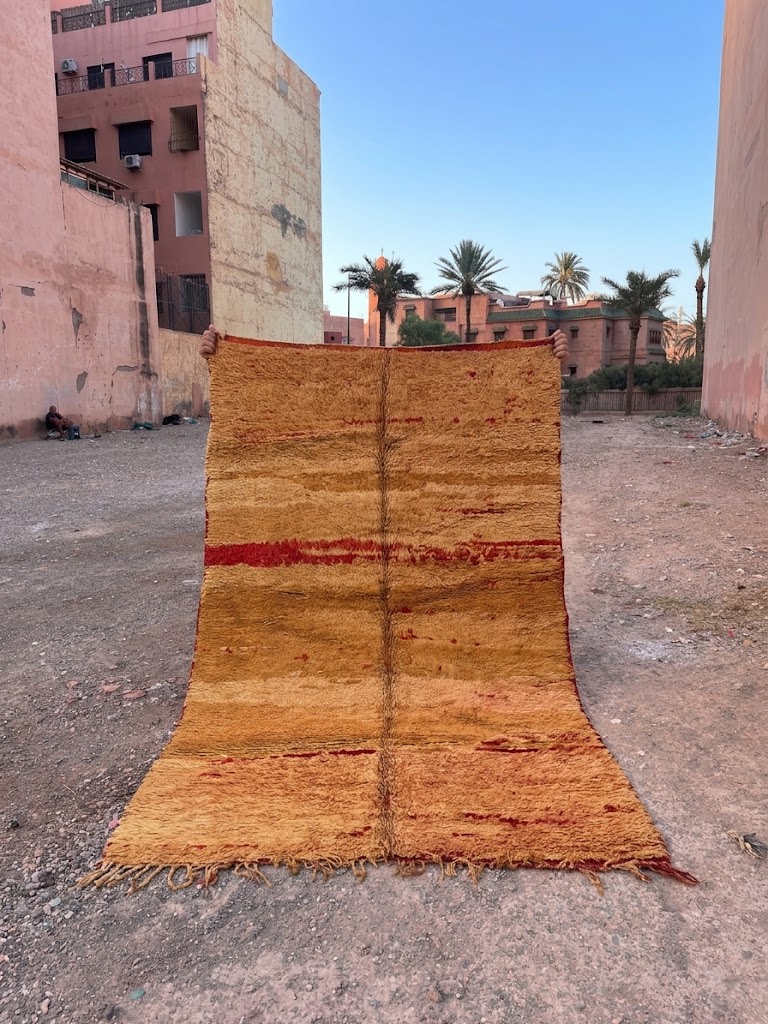
Boujad
Colour defines it. Pinks, corals, reds and terracottas —from the vivid to the faded— over a free composition that rarely closes symmetrically. It is the warmest of the Amazigh traditions.
It is woven on the plains of central Morocco, around the town of Boujad, at the foot of the Middle Atlas. Amazigh women wove it for the home, not to sell; which is why no two of the old pieces are alike. Each one holds a life: the land, the wedding, what is hoped for from the year.
The pink has a definite source: the dye. Madder gives the reds, which —softened or aged by the sun— turn to coral and salmon. To that is added abrash, the shift of tone within a single colour, left uncorrected on a Boujad. It is part of the pattern.
The weave begins on a vertical loom, with a firm warp and a hand-tied knot, the pile at a medium height. The composition follows no template: diamonds, bands and symbols that the weaver strings together as she goes. The pattern moves and changes, and the back shows where it was planned and where it was improvised.
In a room, it works through warmth. Over a neutral floor, among cool materials —stone, concrete, raw linen— the pink and red warm the space with no need for more colour. It sits as a central piece; around it, leave room and a sober line.
Care is simple. Gentle vacuuming, in the direction of the pile and without a rotating brush. Stains, dry and without rubbing; if water is needed, cold water and a clean cloth. Turning the piece twice a year evens out the tread and the light.
Other pieces in the same amazigh tradition: Beni Ouarain and Boucherouite. Back to all styles
A selection of Boujad rugs
-
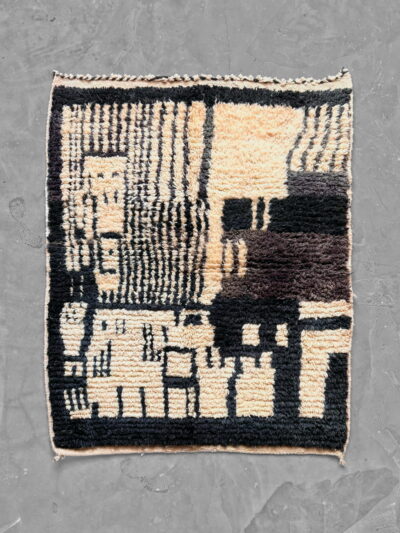
08:14
132 × 157 cm350,00 € -
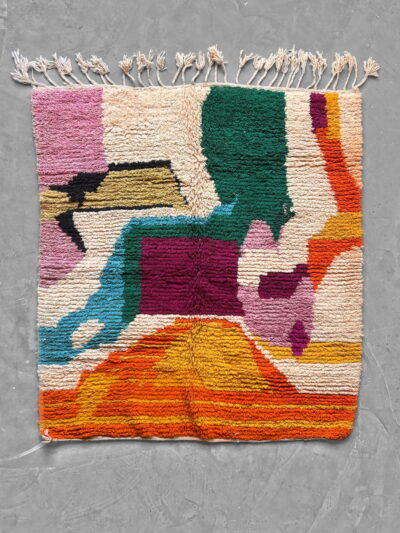
14:26
183 × 200 cm750,00 € -
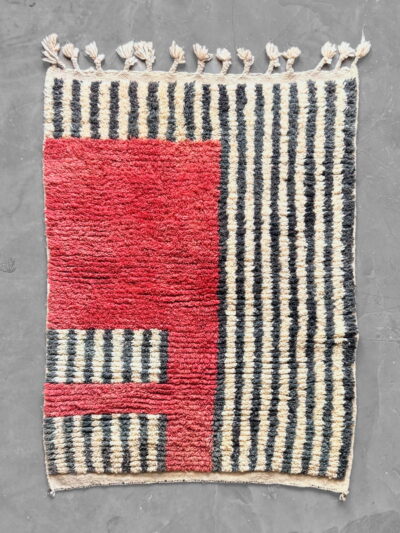
21:59
118 × 157 cm350,00 € -
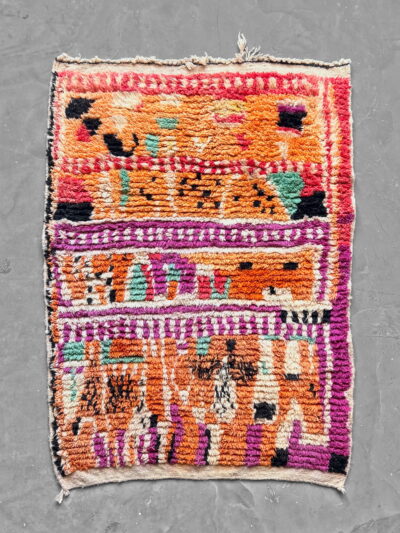
12:21
114 × 162 cm350,00 € -
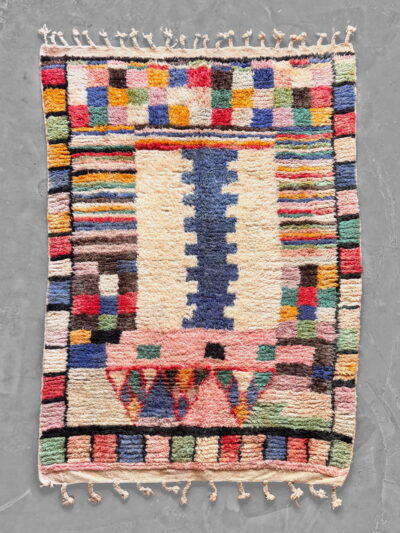
13:26
152 × 210 cm570,00 € -
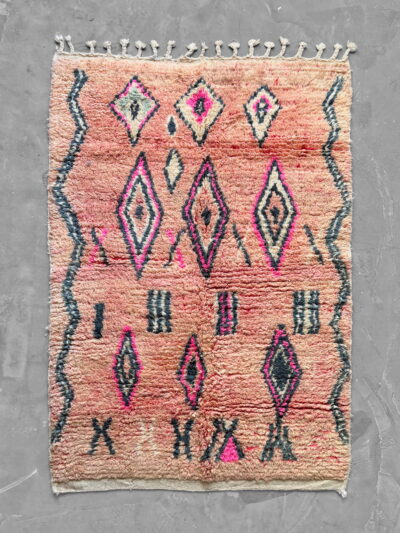
16:38
148 × 216 cm650,00 € -

22:33
149 × 186 cm550,00 € -

17:57
137 × 209 cm550,00 € -

04:30
135 × 236 cm650,00 € -

05:21
170 × 269 cm650,00 € -

08:47
165 × 217 cm550,00 € -

06:58
210 × 304 cm950,00 € -

09:26
111 × 272 cm520,00 € -

11:17
125 × 162 cm290,00 € -

13:24
250 × 154 cm550,00 € -

13:49
140 × 205 cm450,00 € -

14:16
162 × 180 cm550,00 € -

14:38
120 × 250 cm450,00 € -

14:49
150 × 256 cm450,00 € -

18:18
162 × 273 cm650,00 € -

18:59
174 × 295 cm580,00 € -

19:19
164 × 238 cm650,00 € -

19:59
142 × 213 cm550,00 € -

20:56
151 × 265 cm650,00 €